What you need to do
The practical activities and techniques you need to master – what to practice, what to get good at, and what to keep doing.

Product positioning
Defining where your product sits in the competitive landscape so the right customers immediately understand why it matters to them. April Dunford's framework flows through five components in order: competitive alternatives (what would customers do without you?), unique capabilities (what do you have that alternatives don't?), value for customers (so what?), target customer segments (who cares most about that value?), and market category (what context makes your value obvious?). Positioning isn't a tagline exercise – it's a strategic decision about which market you're competing in. The same product positioned as a 'CRM for freelancers' versus an 'invoicing tool with client management' attracts completely different customers and faces completely different competitors.
Messaging framework
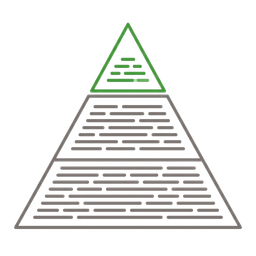
Translating positioning into words that resonate with your target audience. A messaging framework includes: a value proposition (one sentence on why your product is the best solution), 3–4 messaging pillars (the key themes that set you apart), and proof points under each pillar (customer success metrics, testimonials, case studies). The hierarchy matters: start with the value statement, develop pillars that support it, then add proof. The framework ensures consistency – every landing page, email, sales call, and support interaction tells the same story. Feature framing is critical: translate features into benefits. 'Real-time collaboration' is a feature. 'Your team sees changes instantly, so nobody works on outdated information' is a benefit.
Launch planning
Orchestrating the timeline, milestones, and coordination that turn a finished feature into a successful product launch. Start planning 4–6 months before major launches, 8 weeks minimum for smaller ones. Three phases: pre-launch (define goals, create enablement materials, train support and sales, build landing pages, write announcements), launch day (execute the communication plan across all channels simultaneously), and post-launch (monitor metrics, gather feedback, iterate). Map both internal milestones (feature freeze, content approval) and external ones (press announcements, customer emails). Build buffer time – projects always take longer than expected. The most overlooked step: ensuring support and sales teams understand the product before customers hear about it.
Beta program management
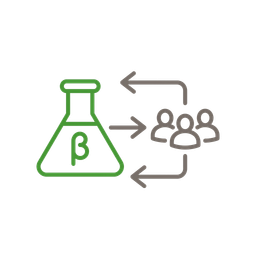
Releasing to a limited group of users to test, gather feedback, and iterate before the public launch. Closed betas (invitation-only) give you control over who tests and enable deeper relationships with testers. Open betas generate more diverse feedback but are harder to manage. Structure the program in three phases: recruit and onboard testers, collect ongoing and directed feedback, and iterate on the product based on findings. Collect two types of feedback: ongoing (bug reports, spontaneous observations) and directed (structured surveys, usability tasks). Categorize feedback into bugs, feature requests, and UX issues to prioritize action. The beta period is your last chance to validate before committing to a public launch – use it to test not just the product but also your positioning, onboarding, and documentation.

Internal launch communication
Ensuring every team that touches customers – sales, support, marketing, customer success – understands what you're launching and why. Write comprehensive internal documentation covering: feature description, strategic goals, business value, customer value, functionality and usage instructions, comparison with existing solutions, rollout timeline, and links to supporting resources. Train support teams to handle common questions. Equip sales with talk tracks, demo scripts, and competitive positioning. Create internal FAQ documents that anticipate questions from every department. The critical test: can someone in customer support explain the new feature to a confused customer without escalating? If not, your internal communication isn't done.
External launch communication
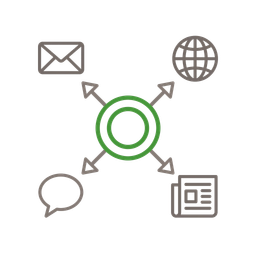
Announcing your product to the world through coordinated, multi-channel messaging. External communication includes: announcement blog posts, email campaigns to existing users, social media posts, press outreach, landing page updates, and in-app notifications. Tailor the message to each channel – a tweet is not a truncated blog post. Coordinate timing so all channels launch simultaneously. For major launches, create a dedicated landing page that explains the value proposition, shows the product in action, includes social proof, and has a clear CTA. For feature releases, in-app announcements and changelog updates may be sufficient. Always define the audience for each communication – prospects, existing users, and power users need different messages about the same launch.

User documentation
Creating the reference material, tutorials, and guides that help users succeed with your product. The Diátaxis framework organizes documentation into four types: tutorials (learning-oriented, step-by-step), how-to guides (goal-oriented, specific tasks), reference (information-oriented, complete details), and explanation (understanding-oriented, concepts and decisions). Write in plain language – 88% of people pretend to understand jargon they don't. Include screenshots that match each step of the process. Test documentation with someone who's never seen your product – if they can complete the task from your docs alone, you're done. Video tutorials work well for demonstrating processes. Keep content evergreen by updating alongside product changes. 67% of customers prefer self-service over contacting support.
Changelog and release notes
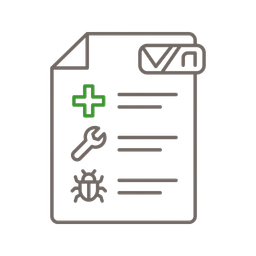
Communicating what's new, what's fixed, and what's changed – building trust through transparency. Changelogs serve technical audiences with detailed, structured records of all changes. Release notes target everyday users with benefit-focused updates. Write two versions: one for developers (technical details, breaking changes, migration steps) and one for users (what you can now do, not how the system works internally). Connect every feature to real benefits – users care about what they can accomplish, not your system internals. Be honest about limitations and provide workarounds with expected fix timelines. Use tools like LaunchNotes, Beamer, or AnnounceKit to publish and distribute updates. Consistent release communication builds a reputation for reliability and active development.
Knowledge base and FAQ
Building self-service support that reduces ticket volume while improving customer satisfaction. Start by identifying your most common support tickets – these become your first articles. Organize into clear categories: 'Getting started,' 'Troubleshooting,' 'Billing,' 'Advanced features.' Use simple language, include screenshots and video walkthroughs, and break content into scannable chunks. A knowledge base goes deeper than FAQs – each article is a complete guide to solving a specific problem. Include search functionality so users can find answers without browsing categories. Keep content current by updating alongside product changes – outdated documentation is worse than no documentation. Intercom's research shows that knowledge bases reduce support volume by 30–50% when done well.
In-app guidance
Guiding users to value at the moment they need help, not before. In-app onboarding includes welcome flows (collect goals, personalize the experience), tooltips (contextual hints that explain UI elements as users encounter them), checklists (track progress toward activation), and empty states (turn blank screens into educational opportunities). The key principle: deliver guidance at the moment users need it, not all at once during signup. Use progressive disclosure – show only what's relevant to the current step. Empty states are marketing opportunities: instead of 'No data yet,' show 'Create your first project in 30 seconds' with a clear CTA. Measure onboarding effectiveness by tracking time-to-value: how quickly new users reach the 'aha moment' that predicts retention.
Product-led growth
Using the product itself as the primary driver of customer acquisition, conversion, and expansion. PLG companies are 2x more likely to experience 100%+ year-over-year revenue growth. The strategy: let users experience value before paying through free trials, freemium tiers, or interactive demos. Reduce time-to-value to hours, not days – high-performing SaaS companies treat this as their most critical metric. Design onboarding that gets users to the 'aha moment' as fast as possible. Build viral loops: collaboration features, shared workspaces, and export capabilities that naturally expose non-users to the product. Tiered pricing aligned to user personas creates natural upgrade paths. PLG works best for products with clear value propositions, intuitive interfaces, and potential for virality. It's not one-size-fits-all – complex enterprise products may need sales-assisted PLG.
Frameworks to know
The mental models and structured approaches that guide how you think about this skill – not rules to follow, but lenses to see through.

April Dunford's positioning framework
The five-component framework from 'Obviously Awesome' that must be completed in sequence. Step 1: Competitive alternatives – what would customers do without your product? (Not just direct competitors, but spreadsheets, manual processes, doing nothing.) Step 2: Unique capabilities – what do you have that alternatives don't? Step 3: Value – what do those capabilities enable for customers? Step 4: Target customers – who cares most about that value? Step 5: Market category – what context makes your value obvious? The order is critical: starting with market category (which most companies do) leads to me-too positioning. Starting with competitive alternatives leads to genuine differentiation.
Good vs. bad
Common mistakes paired with what experienced practitioners do instead – and why the product builder approach changes the game.



Go-to-market is the skill that separates products that get built from products that get used. I've seen technically excellent features die because nobody told users they existed, and mediocre features succeed because the launch was executed brilliantly. The product builder advantage is owning both sides: you build it and you ship it, which means the person who understands the technical nuances is also the one crafting the message. No handoff, no lost context.
The biggest GTM mistake I see in product teams is treating launch as a single event rather than a campaign. A feature announcement blog post on day one is not a launch strategy. A real launch includes: internal enablement two weeks before, a coordinated multi-channel announcement on launch day, follow-up content in weeks two and three, and a retrospective in week four. The blog post is maybe 10% of the work.
April Dunford's positioning framework changed how I think about every product I work on. Before reading 'Obviously Awesome,' I started with the market category ('we're a project management tool') and tried to differentiate within it. Dunford's approach starts from the opposite end: what would customers do without you? That question reveals your actual competition – which is often not who you think it is. The product I was positioning as a 'project management tool' was actually competing with spreadsheets and email threads, not Asana.
AI has already cut our documentation time by 70%. The workflow: I write a one-paragraph description of what the feature does and who it's for. Claude generates the first draft of the help article, release note, and in-app tooltip. I edit for accuracy and tone. What used to take a day per feature now takes an hour. The quality is better too – AI is relentlessly consistent about structure and formatting, which is exactly what documentation needs.
Go deeper
Books to deepen your understanding beyond what fits on this page.
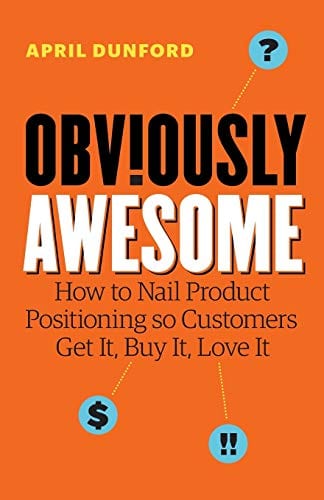
The definitive guide to product positioning – the five-component framework that helps you define how you're the best at something a defined market cares about.
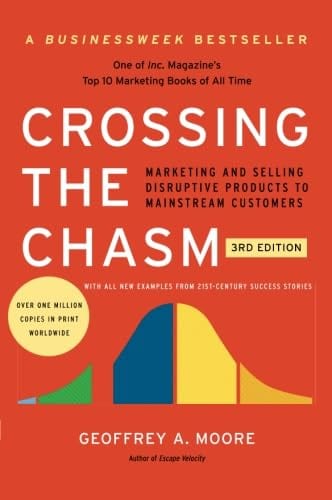
The classic framework for marketing technology products to mainstream customers – how to cross the gap between early adopters and the early majority.
How to build a product that sells itself – frameworks for using free trials, freemium models, and onboarding to drive acquisition, conversion, and expansion.
How to create tech products customers love – covers the entire product lifecycle including discovery, delivery, and go-to-market from the perspective of Silicon Valley's top product teams.