What you need to do
The practical activities and techniques you need to master – what to practice, what to get good at, and what to keep doing.
Written communication
Writing emails, Slack messages, documents, specs, and async updates that don't require follow-up questions. The bar: can the reader take action without asking you to clarify? For Slack, use threads, lead with the ask or decision needed, and provide context below. For emails, put the action item in the first sentence. For async updates, structure as: what changed, why it matters, what's needed from the reader. Technical writing – PRDs, specs, ADRs, and runbooks – follows the same principle: can someone who wasn't in the room make the same decision you would? If not, you've left out critical context.

Meetings
Running fewer, shorter, better-structured meetings. Every meeting needs: a clear purpose (decide, brainstorm, align, or inform), an agenda shared in advance, a facilitator who keeps discussion on track, and written outcomes shared afterward. If the purpose is 'inform,' it should be an async document instead. Amazon's approach: start with silent reading of a prepared document, then discuss – this ensures everyone has context and rewards prepared thinking over quick talking. The test: if nobody changes their behavior after the meeting, the meeting was unnecessary.

Presentations
Structuring decks and live demonstrations that land with different audiences. For executives: lead with the recommendation, not the analysis – they want to know what you're recommending, why they should approve it, and what happens if they don't. For product demos: frame around the customer's goals, not your features. For team demos: show working software, not slides. Structure any presentation as: context (what's happening), tension (why it matters now), and resolution (what we should do). Use the 'rule of three' for main points – audiences retain three ideas far better than five or seven.
Visual communication
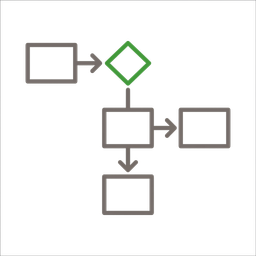
Using diagrams, flowcharts, and system maps to explain ideas that words alone can't convey. Excalidraw is popular for its speed and hand-drawn aesthetic. Miro provides collaborative whiteboarding with templates. Use flowcharts to show processes, system diagrams to show architecture, sequence diagrams to show interactions over time. The principle: if you're explaining something with more than two paragraphs of text, draw it instead. Data storytelling combines trustworthy data, purposeful visualization, and narrative context to present metrics as insights that drive decisions.

Public speaking
Delivering conference talks, team demos, and executive updates with clarity and confidence. Structure talks around one core message – if the audience remembers one thing, what should it be? Open with a hook: a surprising statistic, a provocative question, or a relatable story. Use the 'rule of three' for main points. For conference talks: rehearse the first two minutes until they're automatic – nerves are highest at the start. For executive updates: present the recommendation first, then the supporting evidence.
Frameworks to know
The mental models and structured approaches that guide how you think about this skill – not rules to follow, but lenses to see through.
Situation-Behavior-Impact (SBI)
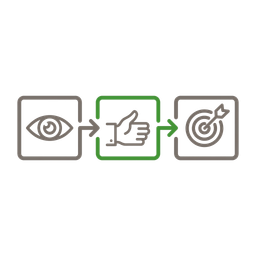
A framework for delivering feedback that's specific, non-judgmental, and actionable. Situation: describe the specific context ('In yesterday's sprint review…'). Behavior: describe the observable behavior, not your interpretation ('You presented the feature without mentioning the known limitations…'). Impact: describe the effect on you, the team, or the project ('…which led the stakeholders to approve a timeline that doesn't account for the remaining work'). SBI works for both positive and constructive feedback. It separates observation from judgment, making feedback easier to receive and act on. Pair with 'what I'd suggest' for constructive cases.
Made to Stick (SUCCESS)
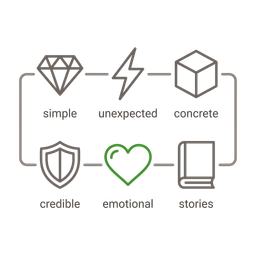
Chip and Dan Heath's framework for ideas that stick in people's minds. Simple: find the core message and express it compactly. Unexpected: break patterns to get attention – surprise makes people pay attention. Concrete: use specific examples and sensory details, not abstractions. Credible: use statistics, authorities, or testable credentials. Emotional: make people feel something – connect to identity or self-interest. Stories: use narratives that simulate and inspire. Apply SUCCESS to: product pitches, launch announcements, roadmap presentations, and any communication where you need the audience to remember and act. The enemy of sticky communication is the 'Curse of Knowledge' – once you know something, you forget what it's like not to know it.
Good vs. bad
Common mistakes paired with what experienced practitioners do instead – and why the product builder approach changes the game.



Communication is the multiplier skill. A brilliant engineer who can't explain their architecture decisions writes code that gets rewritten. A brilliant PM who can't frame a problem clearly gets solutions that solve the wrong thing. The product builder advantage is that you're one person covering multiple roles – which means your communication doesn't lose context in handoffs. But it also means you need to communicate effectively across more dimensions: technical specs for engineers, business cases for executives, user stories for designers, and plain language for customers.
The biggest communication anti-pattern I see in product teams is meeting-as-default. Someone has a question, so they schedule a 30-minute call with five people. Four of them didn't need to be there. The question could have been answered in a Slack thread in two minutes. Async-first communication isn't just a remote work practice – it's a respect practice. It respects other people's time, their focus, and their right to respond when they're ready, not when you interrupted them.
I learned the power of the Pyramid Principle the hard way. Early in my career, I built up to conclusions – 20 slides of methodology before the recommendation. Executives would interrupt on slide 3 asking for the bottom line. When I flipped the structure – recommendation first, evidence second – everything changed. Not just in presentations, but in emails, PRDs, and Slack messages. Lead with the answer. Let people pull the reasoning if they need it.
AI has become my writing co-pilot, and it's made me a better communicator, not a lazier one. I write rough bullet points of what I want to say, Claude expands them into a polished draft, and I edit for accuracy and tone. The AI handles structure and fluency – the things I sometimes struggle with under time pressure. I handle judgment, context, and strategic framing – the things AI can't do. The result is communication that's both faster to produce and higher quality than what I'd write solo.
Go deeper
Books to deepen your understanding beyond what fits on this page.
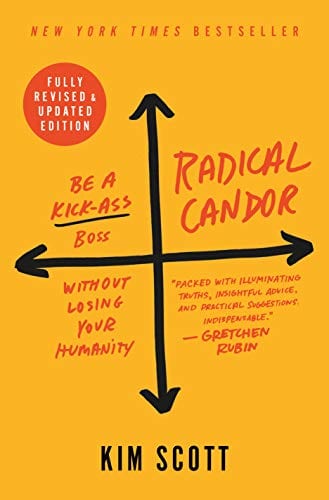
How to be both direct and kind when giving feedback – the framework for caring personally while challenging directly, essential for design critiques, code reviews, and performance conversations.
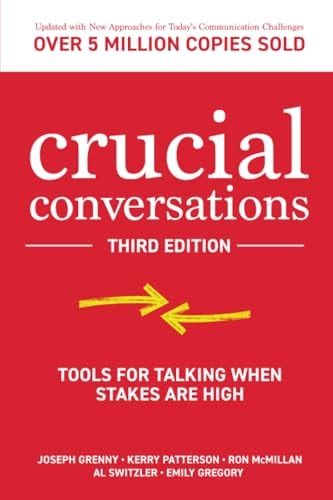
The definitive guide to navigating high-stakes discussions – tools for creating psychological safety, staying in dialogue when emotions run high, and reaching productive outcomes.
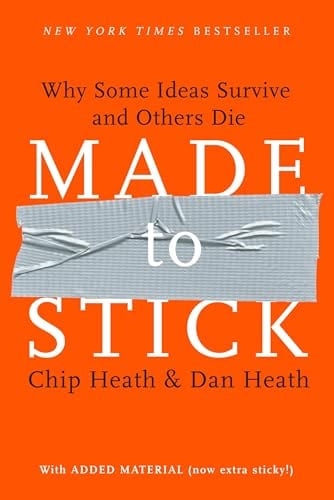
Why some ideas survive and others die – the SUCCESS framework (Simple, Unexpected, Concrete, Credible, Emotional, Stories) for making any communication memorable and actionable.