What you need to do
The practical activities and techniques you need to master – what to practice, what to get good at, and what to keep doing.
Deliberate practice
Going beyond repetition to targeted, goal-oriented skill development. Deliberate practice has three elements: specific goals (not 'get better at React' but 'implement a custom hook that manages WebSocket connections'), immediate feedback (run the code, see the result, compare against expert examples), and reflection (what worked, what didn't, what would I do differently). Choose projects that stretch your abilities just beyond your comfort zone. The research is clear: how you practice matters more than how long you practice.
Spaced repetition
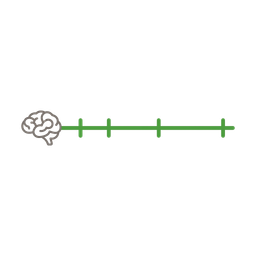
Distributing learning over time rather than cramming – the most evidence-backed learning technique. The brain retains information better when it's reviewed at increasing intervals: learn today, review tomorrow, review in 3 days, review in a week, review in a month. Tools like Anki automate this scheduling. For technical learning, create flashcards for: keyboard shortcuts, API patterns, design principles, SQL syntax. Combine with retrieval practice – actively recalling rather than passively re-reading.
Side projects and portfolios
Learning by building real things – not following tutorials, but solving real problems. Side projects teach lessons that courses can't: dealing with ambiguity, making architectural decisions, shipping to real users, and maintaining code over time. Choose projects that combine a technology you want to learn with a problem you actually care about. Document projects as case studies: the problem, the decisions and why, what you learned, and what you'd do differently.

Online videos
Choosing quality over quantity from educational video content. High-quality technical learning: Frontend Masters (deep-dive courses by practitioners), Egghead.io (concise, practical lessons), and official documentation tutorials. For product management: Lenny's Newsletter videos. For design: Refactoring UI walkthroughs. YouTube is valuable but requires curation – follow specific instructors, not algorithmic recommendations. The anti-pattern: collecting courses you'll never finish. Start one, apply what you learn, finish it, then start the next.

Books
Choosing the books worth the time investment across technical, business, and design domains. Technical foundations: 'Designing Data-Intensive Applications' (Kleppmann), 'Clean Code' (Martin). Product management: 'Inspired' (Cagan), 'Continuous Discovery Habits' (Torres). Design: 'The Design of Everyday Things' (Norman), 'Refactoring UI' (Wathan & Schoger). Read one book per month. Take notes on key ideas. Apply at least one concept from each book within a week. A book that changes how you work is worth more than ten books that confirm what you already know.
Community
Learning from and with other practitioners – the social layer that accelerates individual growth. Join 2–3 focused communities rather than lurking in dozens: a Slack or Discord for your primary technology, one for your role, and one for your industry. Contribute more than you consume – answer questions, share resources, give feedback. Attend local meetups if available. Attend one conference per year for hallway conversations and relationships. Find a study group or accountability partner working on similar skills.
Frameworks to know
The mental models and structured approaches that guide how you think about this skill – not rules to follow, but lenses to see through.

T-shaped skills
The model for balancing depth and breadth in your skill set. The vertical bar of the T represents deep expertise in one or two areas – the skills where you're genuinely excellent and can solve hard problems. The horizontal bar represents broad familiarity across many areas – enough to collaborate effectively, ask good questions, and know when to call in a specialist. For a product builder, the T might be deep in backend engineering (vertical) and broad across product management, design, and data analysis (horizontal). The product builder approach adds a twist: the goal is multiple vertical bars (π-shaped or comb-shaped skills) – deep enough in several areas to work independently across the product development lifecycle.
Good vs. bad
Common mistakes paired with what experienced practitioners do instead – and why the product builder approach changes the game.



Continuous learning is the meta-skill that makes every other skill compound over time. I've watched product builders with five years of experience outperform those with fifteen – the difference is always learning velocity, not tenure. The people who grow fastest do three things consistently: they build things (not just read about building), they teach what they learn (which forces deep understanding), and they reflect on their progress (which makes learning strategic rather than random).
The biggest learning anti-pattern I see is tutorial purgatory. I spent six months watching video courses before I realized I couldn't build anything without the tutorial open beside me. The moment I switched to project-based learning – picking a real problem, using the tutorial as a reference rather than a script – everything changed. Building something ugly and broken teaches more than following a perfect tutorial, because the struggle of figuring things out is where the learning actually happens.
AI has become my most valuable learning partner. Not because it gives me answers – but because it gives me better questions. When I'm exploring a new technology, I ask Claude to explain it, then I ask 'what would happen if I used X instead of Y?' and 'what are the trade-offs I'm not seeing?' and 'how would this break at scale?' The AI doesn't replace thinking – it accelerates the exploration that used to require hours of reading and experimentation. But the key is active engagement: asking questions, challenging the AI's explanations, and verifying against real-world experience.
The T-shaped skill model is too simple for what product builders actually need. You need multiple vertical bars – deep enough in engineering to build production features, deep enough in product management to frame problems clearly, deep enough in design to create usable interfaces. I call it comb-shaped: wide familiarity across the full product development lifecycle, with deliberate depth in 3–4 areas. The depth isn't about being the best at any one thing – it's about being good enough to work independently without a handoff. That's the product builder advantage.
Go deeper
Books to deepen your understanding beyond what fits on this page.
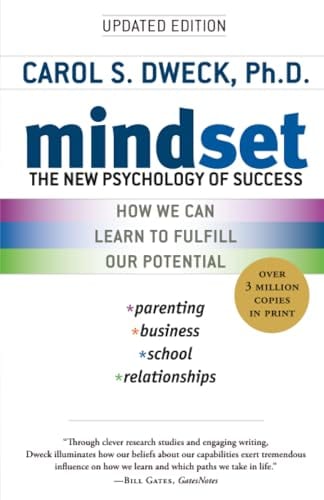
The foundational work on growth mindset – how believing that abilities can be developed through dedication and hard work creates a love of learning and resilience essential for great accomplishment.
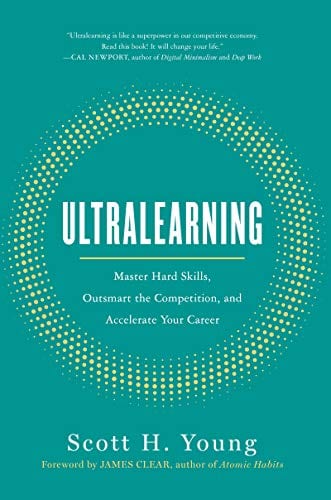
How to master hard skills, outsmart the competition, and accelerate your career – nine principles for aggressive self-directed learning projects, from metalearning to experimentation.
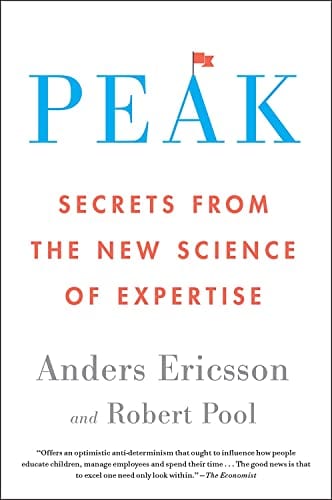
The science of deliberate practice from the researcher who originated the concept – how experts in any field develop their extraordinary abilities through specific types of practice.
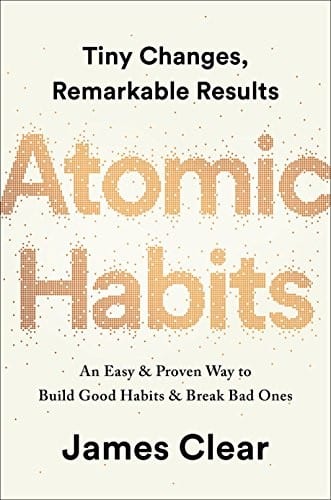
Tiny changes, remarkable results – the practical mechanics of building learning routines that stick. Habit stacking, the 1% rule, and the four laws of behavior change applied to skill development.